


The Real State of Primary Care: Why the NHS Front Door Is Under Strain

 Jan 16,2026
 By admin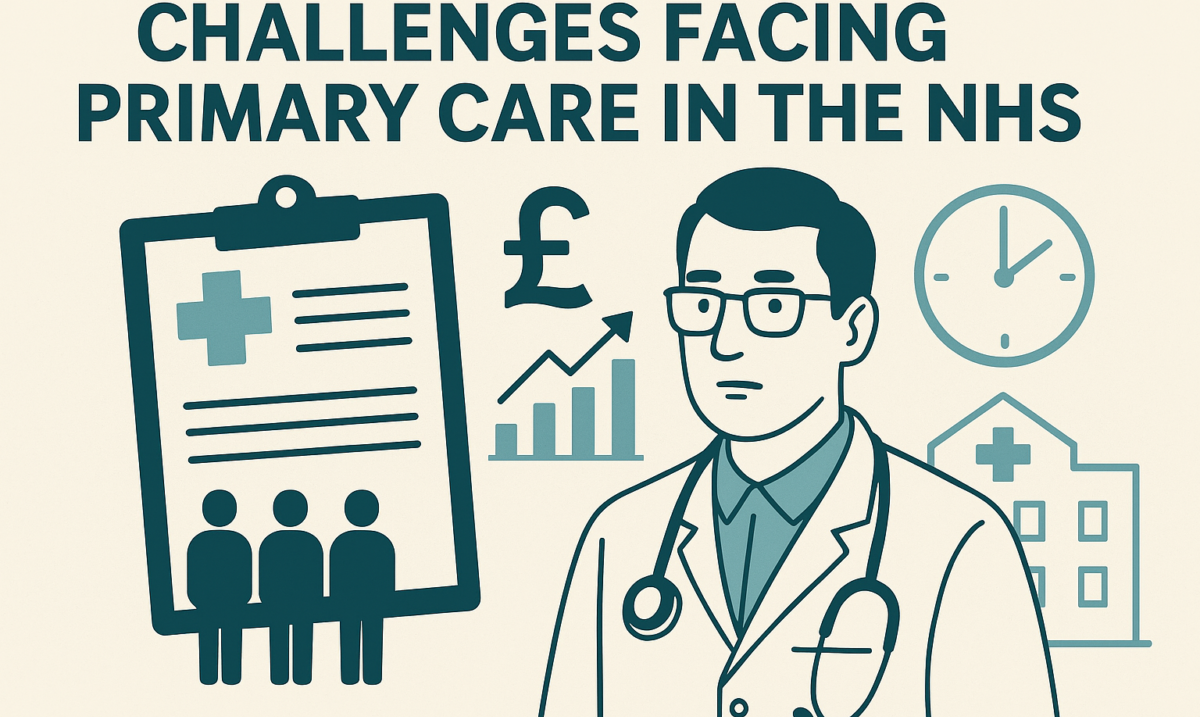
The Real State of Primary Care: Why the NHS Front Door Is Under Strain
Primary care has always been the beating heart of the NHS—responsible for over 90% of all patient interactions despite receiving a fraction of the funding needed to sustain such demand. Yet as we enter 2026, the pressures on the system are reaching a critical inflection point. Data, policy signals, and first-hand accounts from practitioners all highlight the same story: a system overburdened, under‑resourced, and struggling to keep pace with population needs. This article explores the major challenges facing primary care right now, drawing on both enterprise material and the latest national analyses.
Underfunding Meets Overwhelming Demand
For years, the funding imbalance has been stark. In multiple internal analyses, primary care teams highlight that primary care receives only 8–10% of the NHS budget while delivering 90–97% of its activity. This mismatch has created chronic underinvestment in GP capacity, estate infrastructure, and digital tools. The demand side of the equation is also escalating:
- An ageing population
- Rising acuity
- A sharp increase in long‑term conditions
- Post‑pandemic care backlogs
National planning guidance recognises this reality, describing 2025/26 as a year where the NHS must manage “very real pressures… rising costs, unprecedented industrial action, and long-term underinvestment in capacity and technology”. [england.nhs.uk]
The financial picture is particularly challenging: systems are being asked to achieve 4% productivity gains—almost double historical performance—while absorbing pay settlements, inflation, and increased demand pressures.
The Workforce Crisis: Fewer GPs, More Patients
The workforce issue is perhaps the most visible pressure point for patients and practices alike.
According to national workforce data:
- GP growth has stagnated since 2015
- Fully qualified FTE GPs continue to fall
- GP partners have decreased by 6,397 FTE since 2015
- Some areas now have over 3,400 patients per GP [bma.org.uk], [bbc.com]
The BMA and Health Foundation highlight a widening paradox: more GPs are being trained, but fewer are working in NHS general practice. By 2024, over one‑third of licensed GPs were not working in NHS general practice, rising to over half when measured by FTE hours. [health.org.uk], [bmj.com]
Stress and burnout remain alarmingly high, with 71% of GPs reporting their job as “very” or “extremely” stressful and nearly half considering leaving within five years. [bjgp.org]
This workforce fragility has become the central bottleneck in access, continuity, and patient safety.
Administrative Overload: 25,000 Hours a Day Lost
GPs spend around 25,000 hours every day on clinical correspondence administration, costing the NHS £1.5bn annually and directly reducing time available for patient care.
These administrative tasks—sorting, interpreting, and actioning correspondence —represent a massive cognitive and operational burden, contributing significantly to burnout and delayed decision‑making. As continuity of care declines, missed diagnoses and system inefficiencies increase.
This challenge is so significant that nearly all enterprise materials highlight clinical correspondence automation as one of the most actionable levers to restoring equilibrium in primary care.
Fragmented System Architecture & Digital Inefficiencies
The future direction of care is clear: “care closer to home”, with primary care acting as the front door for diagnostics, prescribing, and long-term condition management. National analyses emphasise a shift towards neighbourhood‑level health ecosystems supported by digital innovation and interoperability.
However, structural barriers remain:
- Patchy digital infrastructure across regions
- Interoperability challenges with major patient record systems
- A history of top‑down digital programmes failing to account for practice‑level workflows
Enterprise documents further echo this, noting that without proper system integration and accreditation, technology solutions risk contributing to rather than alleviating GP burden. Tools like +ministr8® are being designed explicitly to address these gaps by integrating with systems like EMIS and SystmOne and following strict compliance standards.
Policy Volatility & Contractual Uncertainty
The abolition of NHS England in 2025 and the rollout of the 10 Year Health Plan have created both hope and uncertainty.
Internal and national sources point to several issues:
- Frequent structural reorganisations have led to “paralysis by analysis”
- Lack of detail on GP contract reform
- Funding ring‑fence removals shifting difficult decisions to local systems
- Significant concerns about neighbourhood provider contracts and workloads
- BMA–government tensions escalating to threats of mass contract resignations
- These shifting structural and political landscapes risk undermining long‑term workforce retention and technological investment.
- Inequalities Are Widening
- Access challenges are not evenly distributed.
BBC analyses show that poorer areas face the worst GP shortages, with list sizes nearly double those of wealthier regions. Patient groups such as unpaid carers, disabled patients, and people for whom English is not a first language face disproportionate barriers to access. [bbc.com]
Neighbourhood Health Service pilots aim to address such inequalities, but success will depend on workforce stability, estate investment, and digital capability.
The Emerging Picture: A System Under Strain but Poised for Change
A consistent theme across all sources is that 2026 could be a turning point. The sector is undeniably under pressure—financially, technologically, and in terms of workforce—but policy signals, pilot innovation, and emerging technologies are aligned around a clear direction:
- Shift care into neighbourhoods
- Invest in digital tools that genuinely reduce workload
- Expand the primary care workforce through training and retention
- Rebalance funding towards prevention and population health
- Modernise estate infrastructure and interoperability
- Use AI and automation to return clinical time to clinicians
As NatWest’s 2026 social care outlook puts it, “demand is structurally ahead of supply”—and the challenge now is how fast the system can adapt. [natwest.com]
Conclusion: Primary Care Needs Capacity, Clarity, and Technology That Works
The challenges facing primary care today are not isolated issues—they are deeply interconnected. Underfunding drives workforce attrition; workforce shortages worsen continuity; administrative overload reduces clinical bandwidth; digital fragmentation slows transformation; and all of this fuels inequalities in care.
Yet there is also cause for optimism. The direction of national strategy, combined with grassroots innovation from practices and health‑tech organisations, points to a future where primary care can rebuild around smarter workflows, neighbourhood‑based care, and technology that truly serves clinicians.
If 2025 was the year the cracks widened, 2026 must be the year the system pivots.


 Feb 15, 2026